
Antique perfume bottle identification starts with observation, not a famous name. A clear photo of the base, a stopper that belongs to the bottle, or a small paper label can be more useful than an attractive shape alone. The aim is to describe the object accurately before deciding when it was made, who made it, or what it may be worth.
That approach is useful whether the bottle came from a family dresser, an estate sale, or a shop shelf. It keeps a pretty object from being overclaimed and gives a genuinely unusual piece the attention it deserves. Work from the details that are hardest to dismiss: construction, marks, materials, closure, condition, and documented comparisons.
1. Decide what kind of bottle you have
Start with function. A perfume bottle usually has a neck made for a stopper, dauber, screw cap, or atomizer fitting. A decanter may have a similar silhouette but a wider opening and a different proportion. A vanity jar, scent flask, and decorative bottle can each borrow visual cues from perfume bottles without being the same thing.
Write down the measurements before you search. Height with and without the stopper, width at the widest point, capacity if known, and the material all make comparison results more useful. Then describe the silhouette plainly: square, pear-shaped, faceted, ribbed, flattened, heart-shaped, or cylindrical. The Corning Museum of Glass Glass Dictionary entry for an aryballos is a good reminder that form and function have long been closely linked in scent containers.
A clear description is better than a premature date. "Small clear faceted bottle with a tall ground stopper" gives you something to research. "Art Deco crystal perfume bottle" makes several claims at once, and each one needs its own evidence.
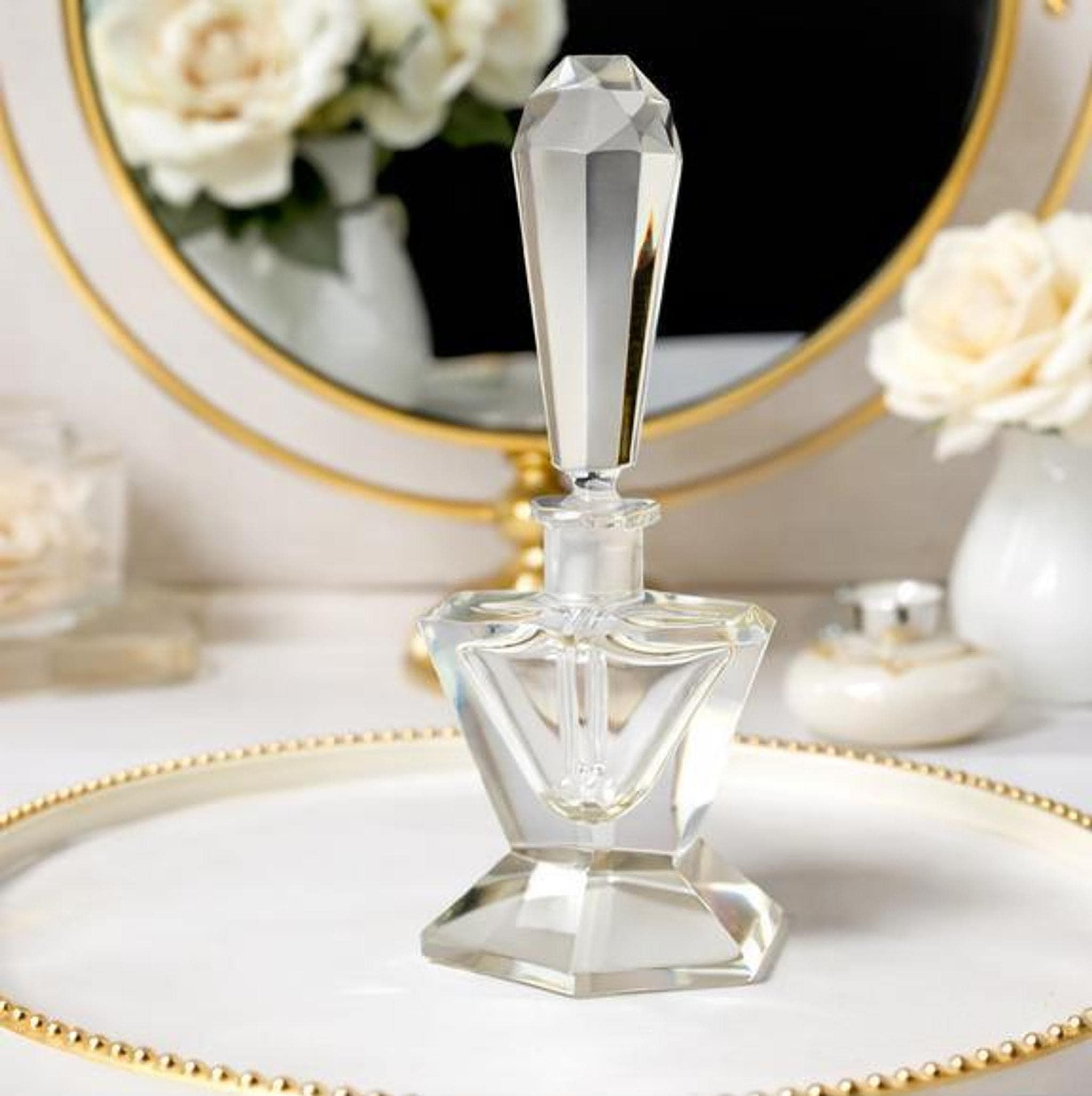
2. Look at the base before the decoration
Turn the bottle over in good, indirect light. The base can reveal a molded mark, etched signature, registration number, origin label, pontil, or a pattern number that is easy to miss from above. Photograph it straight on, then take a second close view at a slight angle so shallow etching becomes visible.
Do not be discouraged by an unmarked base. Plenty of vintage bottles were not signed, and a missing mark does not erase their decorative or collector value. It simply means the attribution must rely more heavily on construction and comparison. On the other hand, a mark should not end the search. Read every letter carefully, compare the style of the mark with documented examples, and make sure it is actually part of the bottle rather than a later retailer label.
Paper labels matter too. Even a partial label may supply a country, maker, distributor, or period clue. Photograph it before wiping the bottle, and avoid soaking, scraping, or using solvents around old adhesive. Once a fragile label is gone, the object loses a useful part of its history.
3. Treat the stopper as part of the object
One of the most useful clues in antique perfume bottle identification is the closure. A matching stopper should sit naturally in the neck, share the bottle's scale and visual language, and show compatible wear. On cut glass, the stopper may repeat the facets of the body. On a hand-blown bottle, a clear stopper may echo the movement or color in the vessel. On an atomizer, the collar, tube, bulb, and nozzle should look like a coherent assembly.
Never force a stuck stopper. Instead, inspect the join from the side. Does it sit squarely? Is the ground portion proportionate? Does the glass color, cut, and wear look related to the bottle? A replacement stopper can still make a bottle attractive, but it changes the description and usually affects collector interest. The same goes for a missing dauber, damaged cork, or an atomizer that no longer works.
Look especially closely at the rim and stopper tip for chips. Tiny flea bites may be acceptable in a display piece when honestly disclosed. A long crack, a heavily ground-down rim, or a stopper that clearly does not belong are reasons to slow down before assigning value.
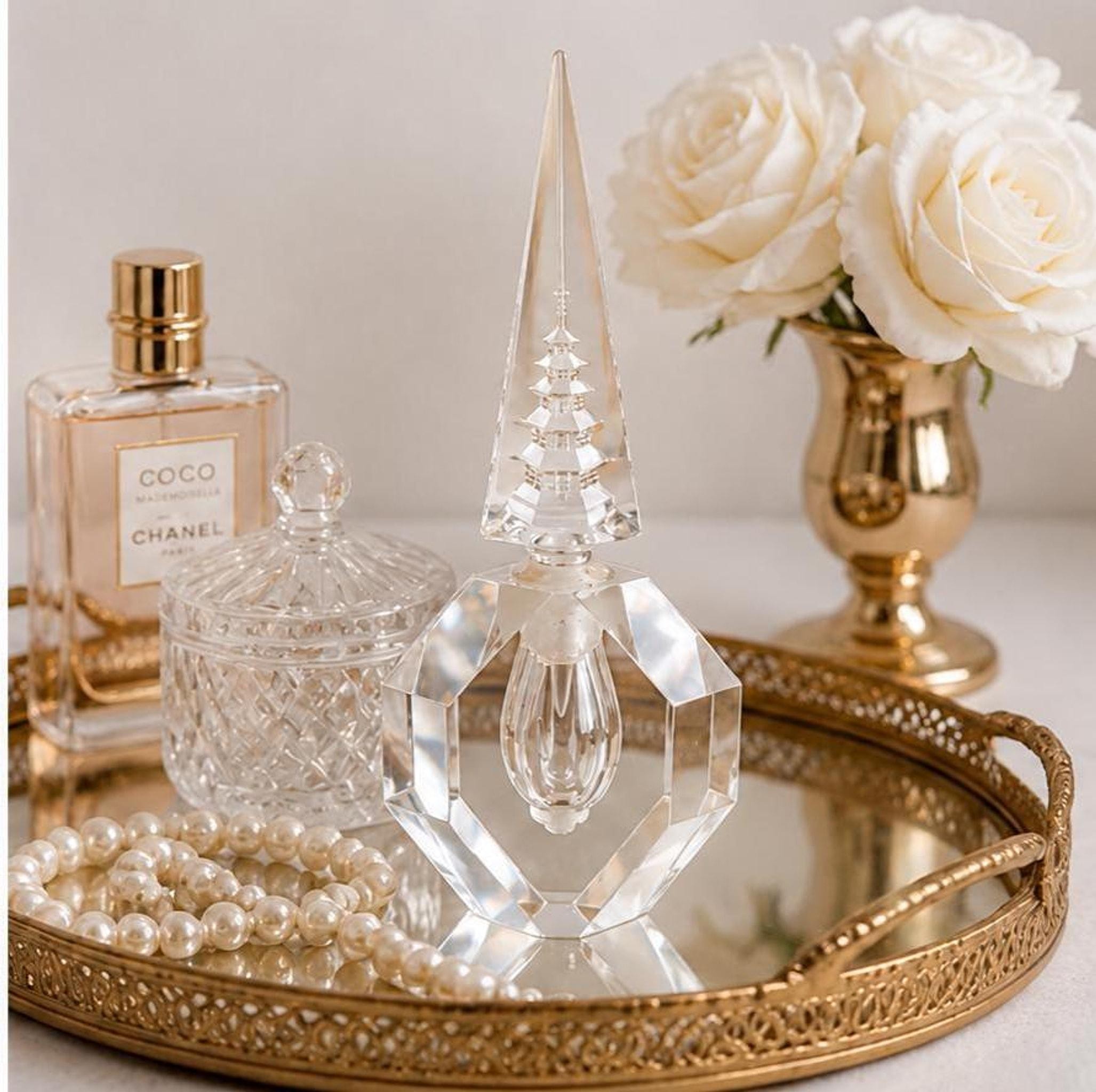
4. Separate cut glass, molded glass, and hand-blown glass
Material and construction help narrow a search, but they do not work as shortcuts to age or price. Hold the bottle to a window or a plain light background and inspect the surface. Crisp facets, a ground stopper joint, and a substantial feel may point toward cut glass. Repeated seams and evenly repeated decoration often point toward a molded process. Softer asymmetry, applied handles, or color moving through the glass may suggest studio or hand-blown work.
These are clues, not verdicts. A molded bottle can be beautifully made. A heavy, clear bottle is not automatically crystal. The safest description is the one your photos support. If you know only that the body is clear and faceted, "cut glass" is often more useful than claiming a precise material you cannot verify.
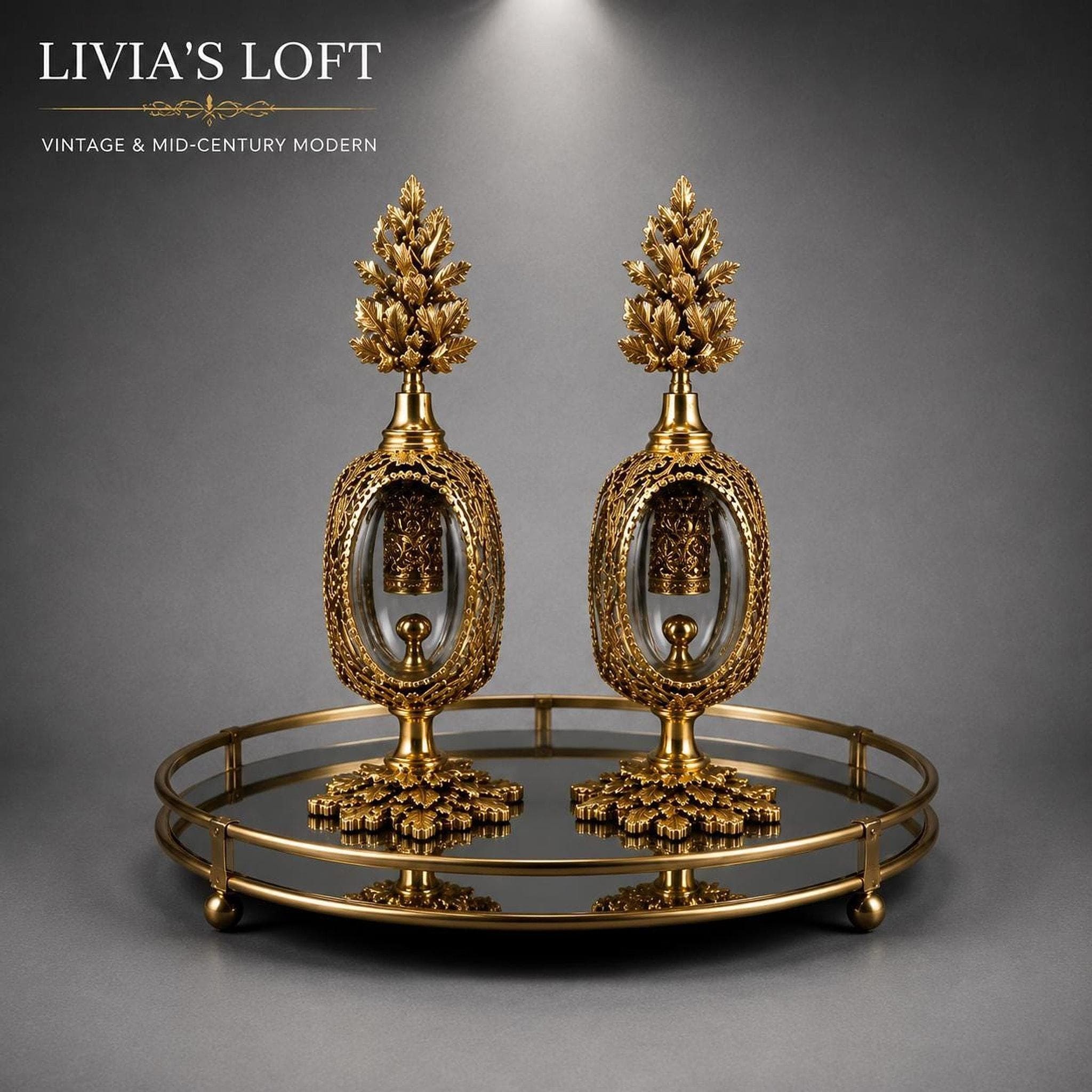
Pay attention to added materials as well. Metal collars, gilt decoration, enamel, silk bulbs, and cork-lined caps can all help place a bottle within a particular design language. They also introduce their own condition questions. Tarnish, worn gilding, corrosion, and loosened mounts should be described plainly rather than polished away before the bottle has been documented.
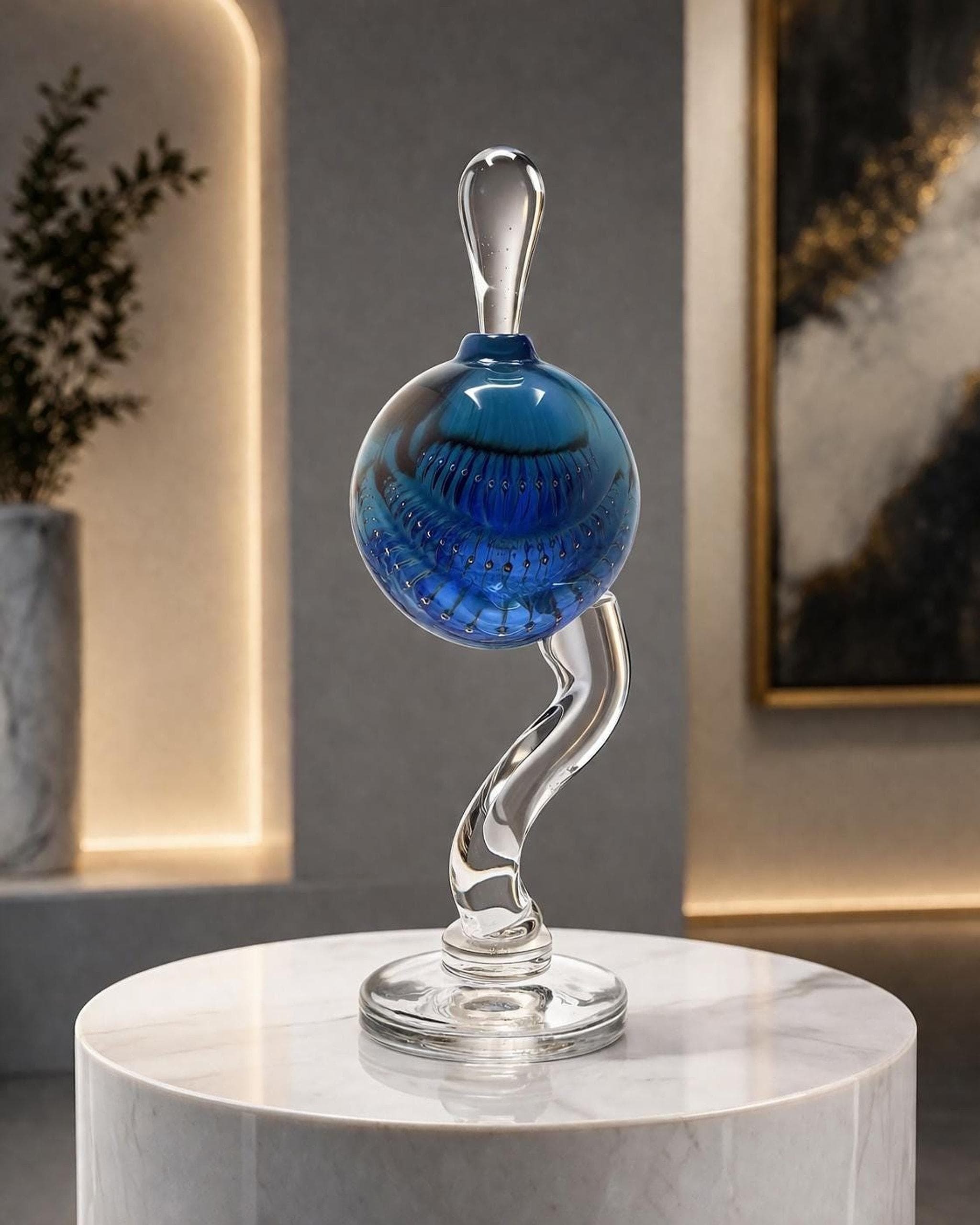
5. Use style as a clue, not a conclusion
Style can give your research a useful direction. Geometric cuts and stepped forms may suggest an Art Deco influence. Filigree mounts, floral decoration, and softer curves may lead toward vanity pieces from a later period. A bright, free-form bottle with a sculptural stopper may belong to a studio-glass tradition. But styles are repeatedly revived, and a later piece can borrow the look of an earlier one very convincingly.
Instead of searching "old perfume bottle," combine the visible facts: "faceted perfume bottle obelisk stopper," "ribbed glass perfume bottle gold filigree," or "signed art glass perfume bottle blue twisted stem." Search engines and reference collections work much better when the query begins with evidence rather than a guess.
The International Perfume Bottle Association recommends approaching a bottle or collection through reference material, auction records, online sources, and its virtual museum. Their collector resources are particularly helpful for seeing how differently scent containers can be made and decorated. Keep a note of what matches and what does not. One mismatch may mean a related pattern, a replacement part, or simply that more research is needed.
6. Compare complete objects, not just one pretty detail
A comparison photograph should confirm several features at once: the full silhouette, base, neck, stopper, decoration, dimensions, and any mark. Matching only the color or a general shape is weak evidence. Good comparisons make it easier to distinguish a maker's documented pattern from a look-alike made decades later.
When looking at sold examples, compare condition and completeness as carefully as design. A signed bottle with a chipped stopper is not the same market comparison as a complete one with clean glass and an original label. Asking prices show what sellers hope to receive. Completed sales, specialist auction archives, and documented museum or association material are better evidence for what a specific object may be.
Keep the conclusion proportional to the evidence. "Unmarked cut-glass perfume bottle, likely mid-century" can be more trustworthy than a precise but unsupported maker claim. Careful language protects a future buyer and makes your own collection records much more useful.
7. Record condition before cleaning or repairing
Condition can change a bottle's appeal more than a broad age estimate. Inspect the rim, stopper, base, corners, cut edges, and every mounted detail. Look for cracks, chips, repaired breaks, cloudiness, residue, loose fittings, worn decoration, and replaced parts. Photograph these areas along with the flattering full view.
Start gently with dry dusting or a soft cloth when you are not sure how the bottle was made. Do not put vintage glass, decorated bottles, or atomizers in a dishwasher. Avoid abrasives and harsh cleaners around gilding, painted decoration, old labels, or metal mounts. A modest amount of honest wear is usually easier to live with than damage caused by an aggressive attempt to make an old object look new.
For a piece you want to display, choose a stable place away from frequent handling, direct sun, humidity, and dramatic temperature changes. The International Perfume Bottle Association notes that less handling lowers the risk of chips, scratches, and breaks, which is a sensible rule for any glass collection.
8. Build a simple identification record
Before you label, insure, sell, or buy a bottle, make one short record. Include the full description, measurements, all marks and labels, photos of the base and closure, known condition, where it came from, and links to the best documented comparisons. This turns a loose group of images into a useful history you can revisit later.
- Photograph the whole bottle. Include front, back, base, neck, stopper, labels, and condition details.
- Measure it. Record height with and without the stopper, width, and any capacity information.
- Describe only what you can see. Start with material, color, shape, construction, closure, and marks.
- Search the rarest detail first. A mark, pattern number, or unusual stopper profile is more useful than "vintage bottle."
- Save the strongest comparisons. Look for complete matches across several details, not one familiar feature.
- Keep uncertainty visible. "Unmarked," "attributed," and "possibly later" are honest and useful collection notes.
Find a bottle with a story you can support
The goal is not to make every old bottle rare. It is to understand the object well enough to enjoy it, care for it, and represent it honestly. A simple unmarked bottle with lovely proportions can still be worth keeping. A signed studio piece with a complete stopper may deserve deeper research. Either way, the details are what make the story convincing.
Livia's Loft gathers perfume bottles that reward that closer look, from cut-glass and art-glass perfume bottles to pieces with distinctive stoppers, color, and vanity detail. For a closer look at one material question, read the guide to vintage crystal perfume bottles. When you are ready to browse, the current collection makes it easy to see the full photographs and details behind each available find.
Frequently asked questions
Where is the maker mark on an antique perfume bottle?
Start with the underside, then inspect the neck, rim, collar, and any removable hardware. Marks may be molded into the glass, lightly etched near the base, printed on a paper label, or hidden under a metal mount. Photograph every mark before cleaning or searching.
Does an antique perfume bottle need a stopper to have value?
A bottle can still be attractive and collectible without its original stopper, but completeness matters. A matching, undamaged stopper usually strengthens a bottle’s appeal because it confirms the intended silhouette and function. Missing or replaced closures should be clearly described and reflected in the price.
How can I tell if a perfume bottle is crystal or glass?
Look for evidence rather than relying on weight or sparkle alone. Crisp cuts, a substantial feel, and a carefully ground stopper joint can support a crystal or cut-glass description, but they do not prove a precise material by themselves. When the maker and material are not documented, a careful description such as cut glass is usually the most accurate choice.
Should I clean an antique perfume bottle before identifying it?
Photograph the bottle first, especially its labels, marks, stopper, rim, and base. Then clean only as gently as the materials allow. Avoid dishwashers, abrasives, harsh chemicals, and soaking around old labels, gilt decoration, metal mounts, or atomizer parts.


